
ADAPTED FROM ORIGINAL POST, DECEMBER 2024.
*Co-authored by Emma Badenas-Perez.
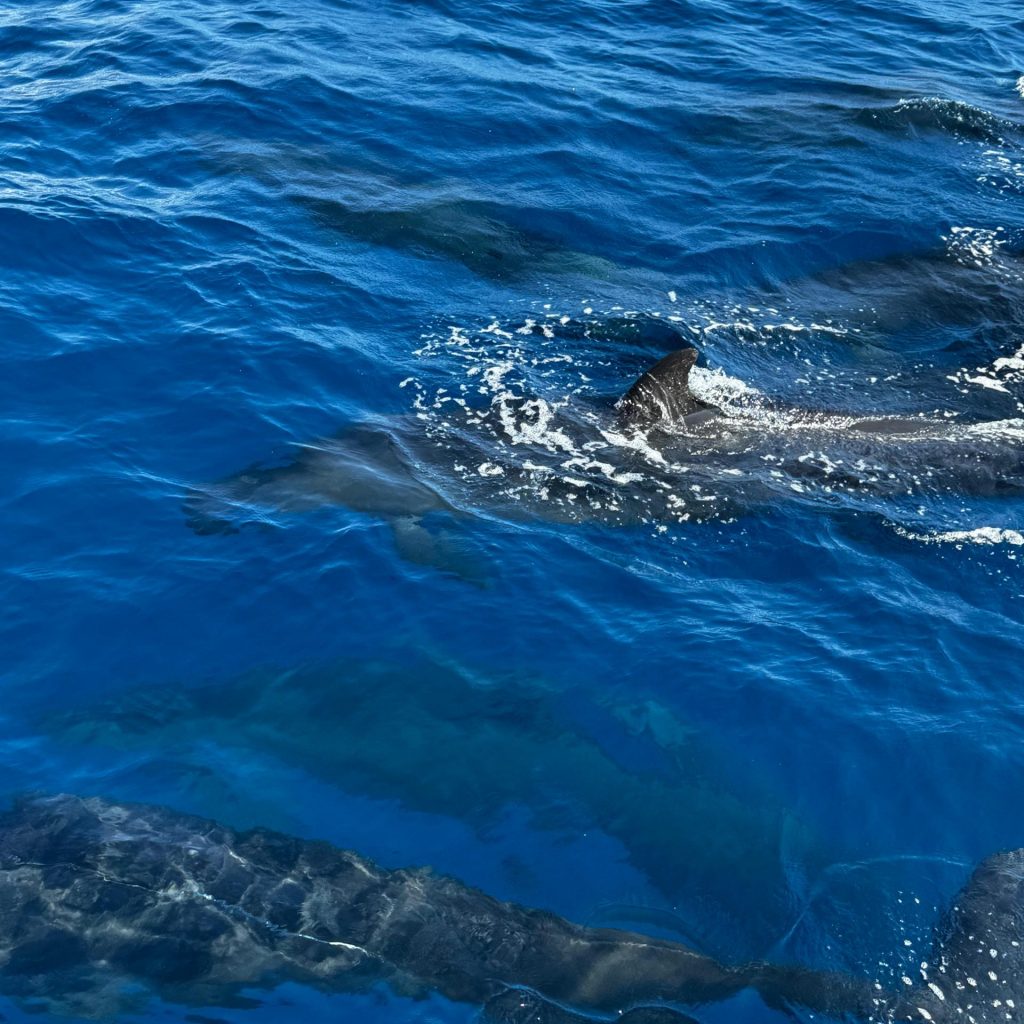
Whilst studying at the University of the Azores in São Miguel, in the North Atlantic, over 800 miles from Europe, I was asked by my Professor to answer the question: why are dolphins more intelligent than whales? As dictated by academic convention, my colleague, Emma*, and I wrote an essay to answer the question. However, we were struck by the flawed assumption behind it. How could we so confidently rank the intelligence of two species we don’t fully understand, and by what metrics? Those so clearly biased to our own human intelligence?
Introduction
What is intelligence, and how do we measure it? Which species are more intelligent than others? Are humans the most intelligent species on Earth? These questions captivate our imagination but are incredibly challenging to answer.
Defining intelligence is not simple, but descriptions of nonhuman intelligence include problem-solving ability, memory, and application of accumulated knowledge, behavioural flexibility, and adaptability [1,2]. However, it is difficult to compare different species on identical tasks to assess their relative intelligence [2]. Even more challenging is overcoming our bias to assess ‘human-like’ intelligence [3], which restricts our ability to recognise intelligence beyond our own limitations.
Nevertheless, several hypotheses attempt to address intelligence. Arguably the most widely cited, is the social intelligence hypothesis [1]. First defined by Humphrey in 1976, it argues that higher intellectual faculties evolved as adaptations to the complexities of social living [4]. It is well accepted that cetaceans are highly intelligent [5], but the relative intelligence of different species remains a topic of debate.
Dolphins live in socially complex, hierarchical groups with social connections maintained from birth, multi-level male-male alliances, and highly synchronised behaviours [6,7]. But similar traits have been observed in whales [8,9], which challenges the notion that dolphins are more social and therefore more intelligent than whales.
The literature describes a coevolutionary relationship between sociality and relative brain size, as large brains evolve in response to complex social environments, according to the social brain hypothesis [1,10]. While all cetaceans have evolved to become highly encephalised, dolphins have been shown to have a higher relative brain size than whales, larger cerebella, and higher cortical neural densities [1, 11, 12]. In contrast, evolutionary constraints may explain why the brains of some deep-diving whales evolved differently, as lower brain metabolism supports extended dive times [12].
We supply two arguments to address the question ‘Why are dolphins more intelligent than whales?’. However, considering uncertainties, contradictions, and the challenges in comparing nonhuman interspecies intelligence, can we be certain that dolphins actually are more intelligent than whales?
Argument 1: If intelligence is predicted by social complexity, and dolphins live in more socially complex groups than whales, it follows that they are more intelligent.
The social intelligence hypothesis suggests that living in large social groups infers evolutionary advantages [1]. These include increased mating opportunities, calf survival, foraging efficiency, and reduced predation [13]. Thus, through natural selection, cognitive ability increases as an adaptation to social living. Under this hypothesis, intelligence is explicitly linked to social complexity. In socially complex groups, intelligence is required due to the additional cognitive challenges such as navigating group dynamics, hierarchies, and cooperative behaviours. Social learning also drives the development of non-social cognitive skills and behavioural flexibility. This is defined in an extension of the theory, the cultural intelligence hypothesis [1].
There is considerable evidence that dolphins live in socially complex groups. Indeed, Connor (2007) reported the most complex social relationships in cetaceans at the time, found in Indo-Pacific bottlenose dolphins (Tursiops aduncus) in Shark Bay, Australia. These dolphins live in ‘fission-fusion’ societies, where individuals frequently join and leave small groups, representing the cognitive challenge of constantly changing relationships [7].
Male-male alliances are also well documented in dolphin groups. These may facilitate a small group of males consorting a female, competing with other male groups, attempting to ‘steal’ females from them, or defending against these attempts [7]. Early work on this topic was conducted by Clutton-Brock, who described how mating behaviour in males is influenced by female characteristics, such as their density, distribution, group size, and whether male assistance in rearing offspring is beneficial [14]. He described this for mammals in general, and whilst it has been explicitly described for cetaceans, this research usually focuses on dolphins [6, 7].
Individuals of both sexes of dolphin are reported to explore and return to their natal ranges throughout their lives (‘natal philopatry’), potentially making strategic relationships in early life that increase reproductive success. However, this behaviour is reported in all cetaceans [7]. For example, it is observed in southern right whales returning to wintering grounds in New Zealand [9] and in humpback whales returning to breeding grounds in the North Pacific [8]. Natal philopatry in both sexes, not just females, was previously thought to be rare and was primarily observed in killer whales and bottlenose dolphins, but Carroll et al., 2016 demonstrated the return of both male and female southern right whales to wintering grounds 11 years after they were first sampled [9].
Synchronised behaviour also implies a high degree of social complexity in dolphins. It is common for multiple dolphins, especially those in an alliance, to surface the water synchronously (within 80–120 ms of each other). This may have evolved as a means to reduce drag in the water or as a performative behaviour in males to impress females [7]. While synchrony is well-documented in dolphins and killer whales, it has also been reported for a wide range of whales. For example, synchronised breathing in long-finned pilot whales; diving cycles of sperm whales; foraging, diving, and lunge feeding in humpback whales; and diving in Blainville’s and Cuvier’s beaked whales [15].
Therefore, the intelligence of dolphins can be demonstrated through the extensive description of their social complexity in the literature, especially in the context of multi-level male-male alliances, which are less well-observed in whales. Dolphins also exhibit natal philopatry and synchronised behaviour, which indicates their intelligence. However, these behaviours are also observed in whales which adds difficulty in applying these arguments to the hypothesis that dolphins are more socially complex and thus more intelligent than whales. One final argument against social complexity as the only driver of intelligence comes from the cephalopods. Claims of cephalopod intelligence include perception, learning, memory abilities, flexible behaviour, causal reasoning, future planning, and mental attribution. However, they evolved in socially simple environments [16]. This, therefore, highlights the controversy in applying the social intelligence hypothesis to argue that dolphins are smarter than whales.
Argument 2: If relative brain size is an evolutionary response to information-rich social environments and an indicator of intelligence, and if dolphins have a larger relative brain size than whales, it follows that they are more intelligent.
Cetaceans have evolved to become highly encephalised. The level of encephalisation in a species or taxonomic group is often represented by the Encephalisation Quotient (EQ). EQ measures actual brain size relative to the expected brain size, calculated from the brain-body weight relationship across various species. This indicates how much larger or smaller a species’ brain is compared to what would be expected based solely on body size [5].
Toothed whales (odontocetes) present a high level of encephalisation [1, 11]. They exhibit EQ values ranging from 0.58 to 4.56, with an average of 2.56. The highest EQs, exceeding 4.0, are found in delphinids such as the Tucuxi dolphin (Sotalia fluviatilis), Pacific white-sided dolphin (Lagenorhynchus obliquidens), common dolphin (Delphinus delphis), bottlenose dolphin (Tursiops truncatus), and Risso’s dolphin (Grampus griseus), with EQs of 4.56, 4.55, 4.26, 4.14, and 4.01, respectively [17]. In fact, dolphins, have the second-largest EQ of all mammals [3]. Furthermore, relative to their body size, delphinids have the largest cerebella compared to other cetaceans and large terrestrial mammals [12]. These high EQ values suggest a correlation with advanced cognitive abilities, problem-solving skills, and complex social behaviours.
Although sperm whales (Physeter macrocephalus) possess the largest absolute brains on Earth, their EQs are lower (0.58). Furthermore, baleen whales (mysticetes) have EQs below 1.0 [17]. This has resulted because significant increases in body size over their evolution have not corresponded with proportional increases in brain size. The evolution of odontocete brain weight occurred in two key phases, with their origin from Archaeoceti coinciding with echolocation development, and second, with the emergence of the Delphinidae family [18].
This pattern underscores significant differences in evolutionary pressures and lifestyles between dolphins and larger whale species, further supporting the argument that dolphins have larger brains and appear to have evolved higher cognitive capacities compared to their body sizes, hence are more intelligent than whales. However, Manger et al. (2006) controversially argued that cetacean brain size evolved due to an increase in thermogenic glial cells to combat heat loss during the Eocene-Oligocene Ocean temperature decline, not cognitive demands, contradicting the hypothesis stated here [19].
The cerebellum, traditionally associated with movement and motor control, is also linked to various cognitive functions, including attention, memory, learning, and emotion, according to some human studies. Dolphins’ cerebella contain a large number of neurons, which may account for their intricate behaviours and sensory capabilities. Notably, orcas (Orcinus orca), the largest delphinid, have a cerebellar quotient (CQ) nearly twice that of the sperm whale (Physeter macrocephalus), indicating greater neural complexity [12].
Recent research suggests that the total number of neurons in the cerebral cortex may be a better indicator of cognitive performance than relative brain size. Dolphins and other delphinids possess a high cortical neuron count, which significantly contributes to their advanced cognitive abilities. Indeed, studies show that dolphin brains have higher cortical neuron densities than species like the pygmy sperm whale (Kogia breviceps), a small deep-diving odontocete. Although factors like anatomy and physiology contribute to the deep-diving abilities of species like ziphiids and kogiids, their smaller brains and cerebella with fewer cortical neurons likely offer another advantage: lower brain metabolism. This reduced neural activity minimizes oxygen consumption, allowing for extended dive times. Comparatively, dolphins’ higher cortical neuron densities and larger cerebella are linked to shorter, shallower dives [12].
Given the metabolic expense of maintaining more neurons and larger gray matter, what advantage outweighs these limitations? The Social Brain Hypothesis [10] posits that large, energy-demanding brains support complex social structures, cooperation, and diverse hunting strategies. In dolphins, this cognitive investment facilitates intricate social interactions and adaptive behaviours, enhancing their survival and success within dynamic environments [12]. If the relative brain size of dolphins has not been evolutionarily compromised by the requirements for deep diving, this may further support the hypothesis of their higher intelligence.
Conclusion
While the essay presents compelling arguments for dolphin intelligence through social complexity and relative brain size, it also highlights the limitations of definitively comparing intelligence across species. The social intelligence hypothesis and brain size metrics offer intriguing insights, but neither conclusively proves dolphins are more intelligent than whales. The research reveals both similarities and differences in cetacean cognitive capabilities, suggesting intelligence is multifaceted and cannot be reduced to simple comparative measures. Ultimately, the essay invites readers to recognise the complexity of intelligence and the challenges associated with interspecies cognitive assessments.
References
[1] Mitchell, C. (2016). The evolution of brains and cognitive abilities. In Evolutionary Biology: Convergent Evolution, Evolution of Complex Traits, Concepts and Methods (pp. 73–87).
[2] Vonk, J. (2021). Nonhuman Intelligence. In: Shackelford, T.K., Weekes-Shackelford, V.A. (eds) Encyclopedia of Evolutionary Psychological Science. Springer, Cham.
[3] Herzing, D. L. (2014). Profiling nonhuman intelligence: An exercise in developing unbiased tools for describing other “types” of intelligence on earth. Acta astronautica, 94(2), 676–680.
[4] Humphrey, N. K. (1976). The social function of intellect. In P. P. G. Bateson & R. A. Hinde (Eds.), Growing points in ethology. Cambridge U Press.
[5] Marino, L. (2004). Cetacean brain evolution: multiplication generates complexity. International Journal of Comparative Psychology, 17(1).
[6] Parsons, K. M., Durban, J. W., Claridge, D. E., Balcomb, K. C., Noble, L. R., Thompson, P. M. (2003). Kinship as a basis for alliance formation between male bottlenose dolphins, Tursiops truncatus, in the Bahamas. Animal Behaviour. 66(1):185–194. https://doi.org/10.1006/anbe.2003.2186.
[7] Connor, R. C. Dolphin social intelligence: complex alliance relationships in bottlenose dolphins and a consideration of selective environments for extreme brain size evolution in mammals. Philos Trans R Soc Lond B Biol Sci. 2007 Apr 29;362(1480):587–602.
[8] Baker CS, Steel D, Calambokidis J, Falcone E and others (2013) Strong maternal fidelity and natal philopatry shape genetic structure in North Pacific humpback whales. Mar Ecol Prog Ser 494:291–306. https://doi.org/10.3354/meps10508
[9] Carroll EL, Fewster RM, Childerhouse SJ, Patenaude NJ, Boren L, Baker CS (2016) First Direct Evidence for Natal Wintering Ground Fidelity and Estimate of Juvenile Survival in the New Zealand Southern Right Whale Eubalaena australis. PLoS ONE 11(1): e0146590. https://doi.org/10.1371/journal.pone.0146590
[10] Fox, K.C.R., Muthukrishna, M. & Shultz, S. The social and cultural roots of whale and dolphin brains. Nat Ecol Evol 1, 1699–1705 (2017).
[11] Marino, L., Connor, R. C., Fordyce, R. E., Herman, L. M., Hof, P. R., Lefebvre, L., … & Whitehead, H. (2007). Cetaceans have complex brains for complex cognition. PLoS biology, 5(5), e139.
[12] Ridgway SH, Brownson RH, Van Alstyne KR, Hauser RA. Higher neuron densities in the cerebral cortex and larger cerebellums may limit dive times of delphinids compared to deep-diving toothed whales. PLoS One. 2019 Dec 16;14(12):e0226206. doi: 10.1371/journal.pone.0226206. PMID: 31841529; PMCID: PMC6914331.
[13] Gowans, S. (2019). Grouping Behaviors of Dolphins and Other Toothed Whales. In: Würsig, B. (eds) Ethology and Behavioral Ecology of Odontocetes. Ethology and Behavioral Ecology of Marine Mammals. Springer, Cham. https://doi.org/10.1007/978-3-030-16663-2_1
[14] Clutton-Brock TH. Mammalian mating systems. Proceedings of the Royal Society of London. Series B, Biological Sciences. 1989 May;236(1285):339–372. DOI: 10.1098/rspb.1989.0027. PMID: 2567517
[15] Zamorano-Abramson J, Michon M, Hernández-Lloreda MV and Aboitiz F and (2023) Multimodal imitative learning and synchrony in cetaceans: A model for speech and singing evolution. Psychol. 14:1061381. doi: 10.3389/fpsyg.2023.1061381
[16] Schnell, A.K., Amodio, P., Boeckle, M. and Clayton, N.S. (2021), How intelligent is a cephalopod? Lessons from comparative cognition. Biol Rev, 96: 162–178. https://doi.org/10.1111/brv.12651
[17] Marino, L. (2002). Brain size evolution. In W. F. Perrin, B. Wursig, & H. Thewissen (Eds.), Encyclopedia of marine mammals (pp. 158–162). San Diego, CA: Academic Press.
[18] Marino, L., McShea, D. W., Uhen, M. D. (2004). Origin and evolution of large brains in toothed whales. Anatomical Records. 281A(2):1247–1255.
[19] Manger, P. R. (2006). An examination of cetacean brain structure with a novel hypothesis correlating thermogenesis to the evolution of a big brain. Biological Reviews, 81(2), 293–338.