

ORIGINALLY WRITTEN JULY 2024.
Efforts to advance carbon capture technologies are often criticised as a distraction from climate change mitigation, a tempting solution that allows us to pat ourselves on the back and continue business as usual. This criticism holds weight. However, as we gradually abandon the dream of the 1.5°C threshold, not only does the need to curb greenhouse gas emissions grow, but so surely does the need to implement carbon capture technologies. How can this need be quantified and separated from climate panic? How do we weigh the risks of controversial new approaches against the danger of doing nothing? As someone interested in the ocean-climate nexus and the interface of science and policy, from an academic perspective, this is fascinating. As one of the 8+ billion people on Earth facing the growing threat of climate change, it is deeply unsettling. Carbon capture is not the whole solution, but it is part of it — so let’s talk about it.
Introduction
Marine carbon dioxide removal (mCDR) has gained interest from scientists, industry, and policymakers in recent years. It offers the potential to complement reductions in greenhouse gas emissions to mitigate climate change. As the effects of climate change become increasingly apparent and countries struggle to meet their targets to reduce emissions, it is believed that CDR strategies play a crucial role in keeping global warming below the 1.5°C or 2°C targets. However, a complex scientific, political, and ethical debate surrounds mCDR. This is primarily due to the unknown negative consequences for marine ecosystems, given that many of these technologies are in their infancy. There are still considerable gaps in knowledge to bridge the gap to the practical implementation of these technologies. However, given the uncertainty around their feasibility and efficacy as a climate mitigation strategy and the unquantified environmental side effects, questions remain about whether this should be done.
Geoengineering and carbon dioxide removal (CDR)
As defined by the Intergovernmental Panel on Climate Change (IPCC), geoengineering refers to technologies that deliberately alter the climate system on a large scale in order to mitigate climate change [1]. For the most part, these techniques have one of two aims:
- Reducing solar energy absorbed by the atmosphere
- Removing carbon dioxide from the atmosphere
Herein, we focus on the latter, specifically marine carbon dioxide removal (mCDR), which refers to the removal of atmospheric carbon dioxide (CO2) through deliberate human activity and its storage in ocean reservoirs [2].
The need
The increase in greenhouse gas (GHG) emissions since pre-industrial times, primarily through the burning of fossil fuels, has led to global warming [3]. Of the GHGs, CO2 has the largest relative impact on planetary warming [4]. Indeed, cumulative CO2 emissions have been shown to have a linear relationship with projected global temperature up to the year 2100 [1]. The Paris Agreement, a legally binding treaty adopted in 2015 under the United Nations (UN) Framework Convention on Climate Change (UNFCCC), aims to limit the temperature increase to 2°C, or if possible 1.5°C above pre-industrial levels, by reducing GHG emissions [5]. To achieve this, mitigation and adaptation strategies are required. Regarding mitigation, the primary strategy is to reduce GHG emissions, and the IPCC has developed several mitigation pathways that project future warming of the planet, depending on the extent of emission reduction [1]. In the low GHG scenario, climate change mitigation facilitates a two-in-three chance of limiting global atmospheric surface warming to below 2ºC by 2100 (relative to pre-industrial times). In the most stringent pathway, warming is limited to 1.5ºC [6]. However, due to the ongoing burning of fossil fuels and the lack of effective climate change mitigation policies, current emissions continue to increase in line with trajectories that predict a likely warming of 4.3ºC by 2100 [7]. Some GHG scenarios predict that an overshoot of the target will be followed by a subsequent drop in temperatures. These scenarios require strategies such as CDR to achieve negative CO2 emissions, thereby returning to the level of warming before the overshoot [3].
CDR strategies are considered by the IPCC as “unavoidable”, fulfilling three potential roles: [3]
- Short-term lowering of net atmospheric CO2
- Offsetting those emissions that will prove difficult to reduce
- Achieving net negative CO2, where CDR exceeds annual emissions
Effective CDR will be pivotal in reaching global warming targets [2], and failure to reach emission reduction targets will increase the need to implement these technologies (in the overshoot scenarios) [3]. However, CDR strategies would need to be implemented on a large scale over a long period to achieve their full potential in climate change mitigation [1]. While land-based CDR technologies have been explored for decades, research into mCDR is newer [2]. This is being explored due to the ocean’s great potential as a carbon sink, characterised by high solubility and inertia [8], [9]. Indeed, the ocean can hold 50 times more carbon than the atmosphere. As such, it has naturally, without human intervention, played a significant role in mitigating climate change, absorbing 20–30% of anthropogenic CO2 emissions. Research into mCDR explores the manipulation of natural oceanic processes, leveraging the ocean’s role as a carbon sink with significant potential to mitigate climate change [8]. Indeed, ocean-based methods of CDR have the potential to remove 1–100 gigatons (Gt) of CO2 per year [2]. However, the full extent of the positive climatic effects of mCDR technologies is unknown. There is uncertainty surrounding the timeframes for carbon storage, and it is possible that, in the longer term (decades to millennia), the carbon stored in the deep ocean may be returned to the atmosphere. Furthermore, the potential negative ecological effects are often not well characterised. Therefore, although the IPCC report states that CDR plays “a major role” in mitigation scenarios, it is also acknowledged that there is insufficient evidence to assess not only costs and feasibility, but also the side effects and potential environmental impacts of CDR [1, 2]. Growing interest in mCDR Interest, research and investment in mCDR are growing. Over recent years, the emphasis on mCDR techniques in efforts to mitigate climate change has increased. For example, mCDR has been a key discussion point at intergovernmental meetings such as the launch of the UN Decade for Ocean Science for Sustainable Development and meetings for the UNFCCC [10]. To analyse scientific research interest, a PubMed search for “marine carbon dioxide removal” was performed, revealing the number of peer-reviewed publications on the topic. This illustrates the growing interest in this area within the scientific community, as shown in Figure 1 [11].
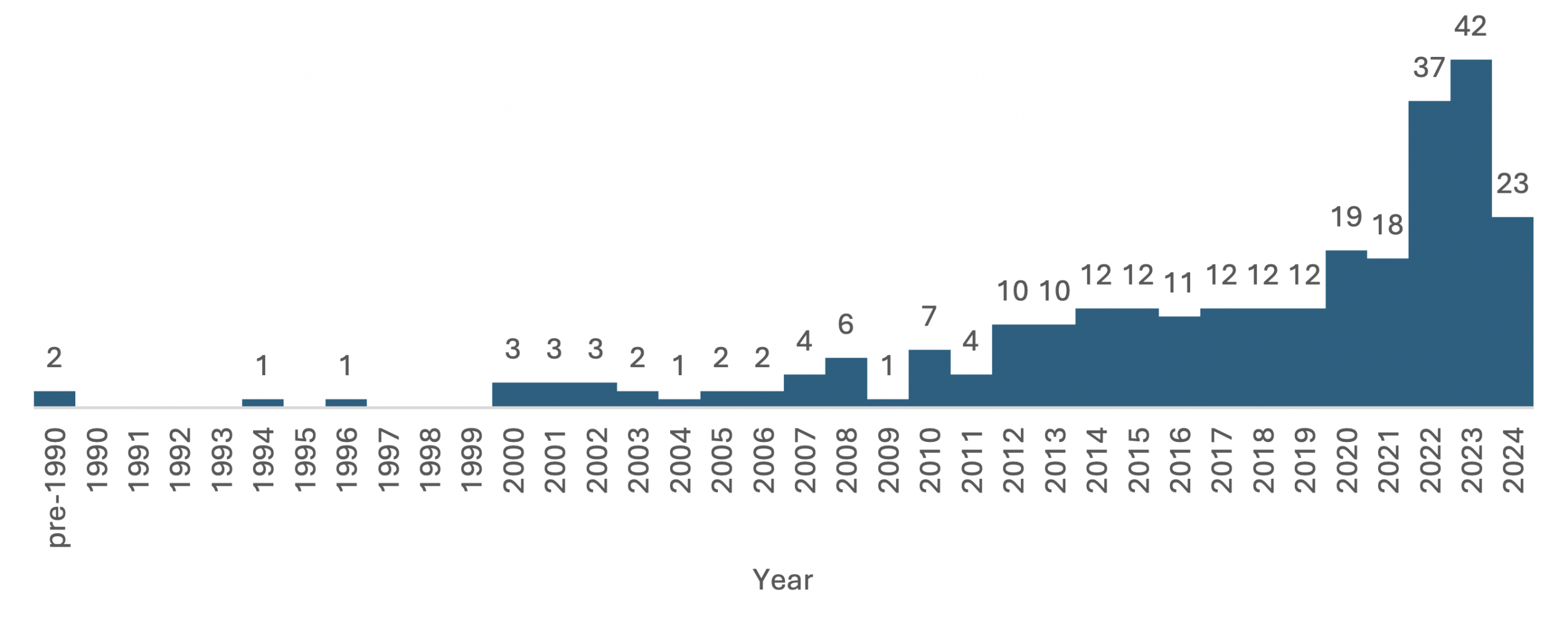 Figure 1. Number of records per year from PubMed search: “marine carbon dioxide removal” (no additional filters), search carried out on 02/08/2024.[11]
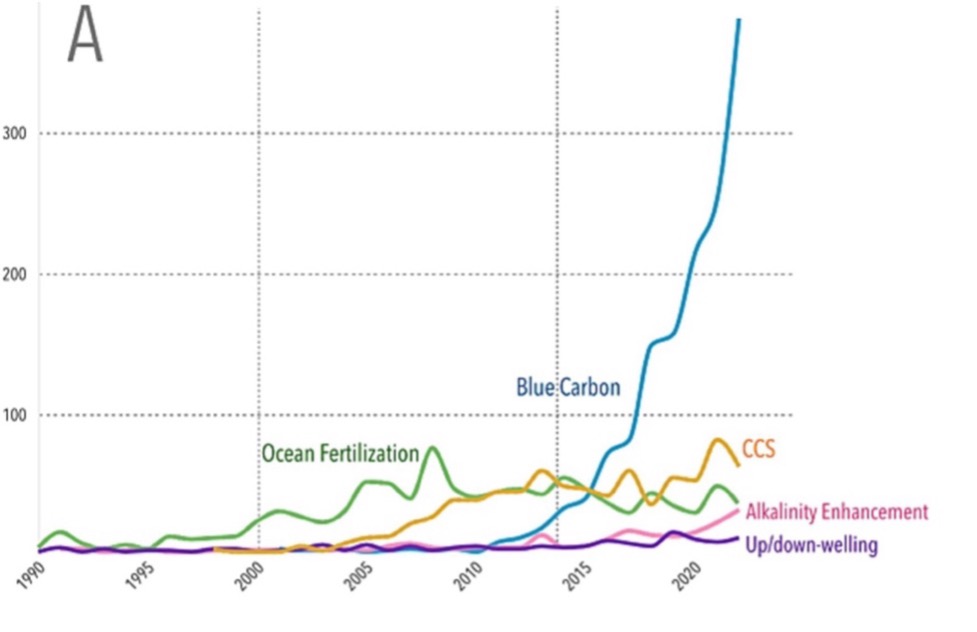
De Pryck and Boettcher (2024) conducted an analysis of records from Scopus, Elsevier’s database, using broader search terms, which returned a larger number of results. The increasing trend in records since the 1990s is evident again in Figure 2, which also illustrates the shifting research interest in specific mCDR methods. For example, publications on ocean fertilisation peaked between 2005 and 2010, whereas interest in blue carbon has increased exponentially since around 2010 [10].
mCDR approaches
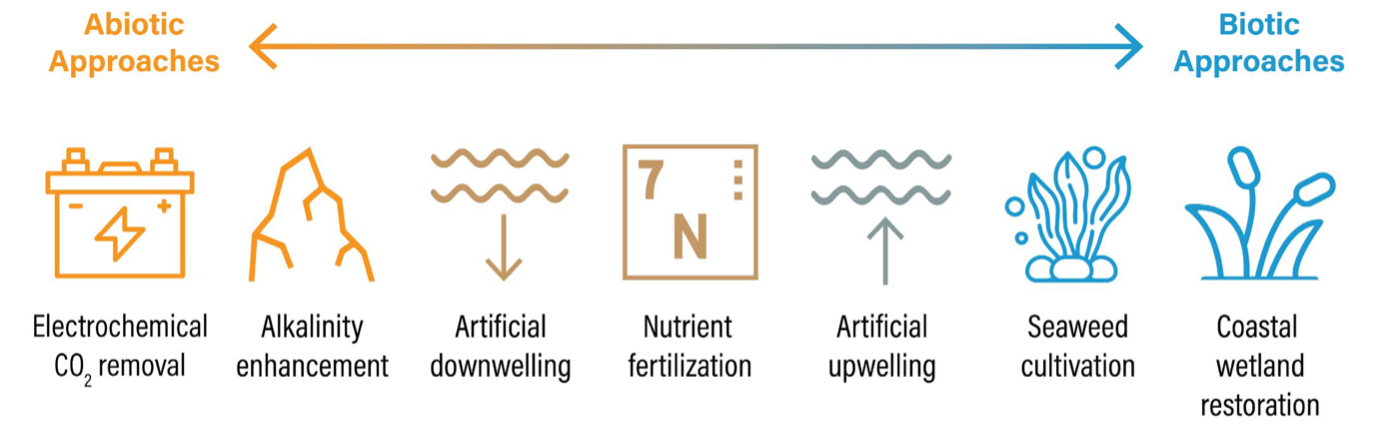
There are various technologies available to sequester CO2 from the atmosphere and store it in the ocean. In fact, the Group of Experts on the Scientific Aspects of Marine Environmental Protection (GESAMP) Working Group Report presents a total of 27 technologies, although most are still conceptual or undergoing pilot studies [12]. Figure 3 illustrates seven main techniques of mCDR that can be categorised along the axis of abiotic to biotic approaches. Abiotic approaches rely on chemical processes, whereas biotic approaches utilise biological processes [13].
Deep Dive…
Enhanced Ocean Alkalinity – A Challenge for Scalability
One approach that has gained recent attention is alkalinity enhancement, also known as enhanced ocean alkalinity. This works by increasing the alkalinity of the water by raising the concentration of proton acceptors. This can be done, for example, by the addition of slaked lime (calcium hydroxide, Ca(OH)2), which reacts with CO2 in the water to produce bases (proton acceptors). This reaction effectively removes CO2 already in the water, allowing further dissolution of atmospheric CO2 into the ocean and with the co-benefit of neutralising acidification [9].
According to the IPCC Climate Change Mitigation Report (2022), ocean alkalinity enhancement has the potential to sequester 1–100 Gt of CO2 per year. However, the extremely wide range for estimated potential CO2 uptake shows the degree of uncertainty around these technologies [2]. Research remains theoretical with no large-scale, real-world experimentation. Models have also highlighted the uncertainty surrounding the efficacy of this approach and its potential negative side effects, including changes to seawater pH and saturation states, as well as the possible release of both nutrients and toxic elements [2, 9, 14, 15].
The scalability of this approach is a key challenge. Models have revealed that the amounts of slaked lime (Ca(OH)2) required for adequate alkalinisation efficacy result in local carbonate chemistry conditions that exceed natural variability and unprecedented changes in ocean biogeochemistry [14, 15]. However, when models are run with a much lower volume of slaked lime, the potential for CO2 removal from the atmosphere is limited [16]. Research has also shown that while pH might increase in surface waters, liming cannot fully prevent ocean acidification in deep waters. Furthermore, modelling also revealed that the Arctic Ocean was a likely hotspot for unintended changes, with negative effects for marine biota and overall unknown ecological consequences [15].
Further research is needed to quantify the effect on marine ecosystems from enhanced ocean alkalinity and to analyse the resilience of marine ecosystems. This has been highlighted as particularly important in the context of the geographical heterogeneity of effect and potential local increases in pH [9].
Deep Dive…
Ocean fertilisation – Unregulated experiments
While nutrient fertilisation leverages the natural process of phytoplankton growth and CO2 uptake, it is considered a more interventionist technique than other biotic approaches. The evolution of iron fertilisation dates back to as early as 1990, when the iron hypothesis was proposed to address low phytoplankton populations in areas with high nutrient levels. With the discovery of the iron limitation of phytoplankton growth came the idea that growth could be stimulated with the addition of iron. This would increase the amount of carbon stored in phytoplankton biomass, which, when it sank, would store this carbon in the deep ocean [10]. Compared to ocean alkalinity enhancement, ocean fertilisation has a much lower potential for carbon uptake, just 1–3 Gt of CO2 uptake per year. There is, however, uncertainty surrounding potential damage to ocean ecosystems and how to effectively monitor the long-term effects of fertilisation [2].
Commercial interest in ocean fertilisation grew throughout the 2000s [10], but it was surrounded by controversy when, in 2012, American businessman Russ George performed his own iron fertilisation experiments in the Pacific Ocean in “the biggest ever geoengineering experiment”. George dumped around 100 tonnes of iron sulphate off the west coast of Canada, in contravention of UN regulations [17].
This experiment was not only environmentally, but also politically controversial, as were George’s previous attempts at unregulated ocean fertilisation [17]. These ‘experiments’ were in clear contravention of the London Convention and the UN Convention on Biological Diversity, which state that iron fertilisation can only occur for legitimate scientific research [18], [19]. Legitimate questions were raised about the international regulation of ocean fertilisation and other mCDR technologies in areas beyond national jurisdiction (ABNJ) [10].
Biotic approaches, such as seaweed cultivation and coastal wetland restoration, rely on the uptake of CO2 into biological matter. They are associated with potentially lower risk than more interventionist approaches and have the added benefit of enhancing biodiversity and ecosystem services [3], [10]. Whilst these ‘blue-carbon’ approaches have a lower potential for CO2 uptake (<1 Gt CO2 per year) [2], they are favourable as nature-based solutions and have been widely considered ‘win-win’ in their potential to mitigate climate change whilst bringing about conservation and biodiversity benefits [10].
International Governance
The relative infancy of many mCDR technologies, as well as uncertainties around their practical application, efficacy, and associated risks, translates into potential difficulties in international regulation. Although mCDR is not covered in detail within international legislation, the precautionary principle suggests a precautionary approach to new technologies with ill-defined ecological and environmental effects. In addition, several protocols and conventions refer specifically to ocean fertilisation.
The London Protocol
The London Protocol entered into force in 2006, replacing the previous London Convention (The Convention on the Prevention of Marine Pollution by Dumping of Wastes and Other Matter 1972), which came into force in 1975, in an important step to protect the marine environment from anthropogenic activities [19]. The London Protocol aims to prevent marine pollution, applying the precautionary approach to control the dumping of waste and other matter at sea. The Protocol addresses marine geo-engineering, specifically ocean fertilisation. It states that, unless for legitimate scientific research, ocean fertilisation should not be permitted due to potential risks to the marine environment. Activities for legitimate scientific purposes are subject to stringent environmental impact assessments [20].
The UN Convention on Biological Diversity
The UN Convention on Biological Diversity (CBD) was adopted in 1992. It aims to address the global decline in biodiversity through three objectives: the conservation of biological diversity, the sustainable use of its components, and the fair and equitable sharing of benefits. The CBD emphasises the precautionary approach, which implies that to prevent environmental degradation, activities with a risk of significant harm to biodiversity or lacking scientific certainty of negative side-effects should not be implemented [18]. In 2008, an additional decision was adopted which refers to ocean fertilisation. It states that only small-scale scientific research studies in coastal waters are permitted, and emphasises the need for a scientifically sound rationale to carry these out as well as a thorough assessment of potential impacts on marine ecosystems and biodiversity [21].
The BBNJ Agreement
The BBNJ Agreement is the agreement under the United Nations Convention on the Law of the Sea (UNCLOS) regarding the conservation and sustainable use of marine biological diversity in ABNJ. The Agreement was adopted in 2023, but has not yet entered into force. It is the first international, legally binding instrument in ABNJ to protect marine biodiversity for the present and long-term, by ensuring its conservation and sustainable use. If the BBNJ enters into force, it could impact mCDR research and implementation in several ways. For example, a requirement for stringent environmental impact assessments and the facilitation of area-based management tools, including marine protected areas, which may prohibit certain activities [22].
Conclusion
References
[1] IPCC, ‘Climate Change 2014: Synthesis Report. Contribution of Working Groups I, II and III to the Fifth Assessment Report of the Intergovernmental Panel on Climate Change’, IPCC, Geneva, Switzerland, 2014. [Online]. Available: https://ar5-syr.ipcc.ch/ipcc/ipcc/resources/pdf/IPCC_SynthesisReport.pdf
[2] IPCC, ‘Climate Change 2022: Mitigation of Climate Change’, IPCC, Working Group III contribution to the Sixth Assessment Report of the Intergovernmental Panel on Climate Change, 2022. [Online]. Available: https://www.ipcc.ch/report/ar6/wg3/downloads/report/IPCC_AR6_WGIII_FullReport.pdf
[3] IPCC, ‘Climate Change 2023: Synthesis Report. Contribution of Working Groups I, II and III to the Sixth Assessment Report of the Intergovernmental Panel on Climate Change.’, IPCC, Geneva, Switzerland, 2023. [Online]. Available: https://www.ipcc.ch/report/ar6/syr/downloads/report/IPCC_AR6_SYR_LongerReport.pdf
[4] R. Simmer, E. Jansen, K. Patterson, and J. Schnoor, ‘Climate Change and the Sea: A Major Disruption in Steady State and the Master Variables’, ACS Environ. Au, vol. 3, no. 4, pp. 195–208, Jul. 2023, doi: 10.1021/acsenvironau.2c00061.
[5] UNFCCC, ‘Paris Agreement’, United Nations, 2015. [Online]. Available: https://unfccc.int/sites/default/files/english_paris_agreement.pdf
[6] IPCC, The Ocean and Cryosphere in a Changing Climate: Special Report of the Intergovernmental Panel on Climate Change, 1st ed. Cambridge University Press, 2022. doi: 10.1017/9781009157964.
[7] IPCC, The Ocean and Cryosphere in a Changing Climate: Special Report of the Intergovernmental Panel on Climate Change, 1st ed. Cambridge University Press, 2022. doi: 10.1017/9781009157964.
[8] L. Bopp, C. Bowler, L. Guidi, E. Karsenti, and C. de Vargas, ‘The Ocean: a Carbon Pump’, ocean-climate.org, 2017. [Online]. Available: https://www.ocean-climate.org/wp-content/uploads/2017/03/ocean-carbon-pump_07-2.pdf
[9] M. Butenschön, T. Lovato, S. Masina, S. Caserini, and M. Grosso, ‘Alkalinization Scenarios in the Mediterranean Sea for Efficient Removal of Atmospheric CO2 and the Mitigation of Ocean Acidification’, Frontiers in Climate, vol. 3, 2021, doi: 10.3389/fclim.2021.614537.
[10] K. D. Pryck and M. Boettcher, ‘The rise, fall and rebirth of ocean carbon sequestration as a climate “solution”’, Global Environmental Change, vol. 85, p. 102820, 2024, doi: https://doi.org/10.1016/j.gloenvcha.2024.102820.
[11] National Institute for Health and National Library of Medicine, ‘PubMed search “marine carbon dioxide removal”’. Accessed: Jul. 02, 2024. [Online]. Available: https://pubmed.ncbi.nlm.nih.gov/?term=marine+carbon+dioxide+removal
[12] GESAMP, ‘High level review of a wide range of proposed marine geoengineering techniques’, IMO/FAO/UNESCO-IOC/UNIDO/WMO/IAEA/UN/UN Environment/ UNDP/ISA, 98. [Online]. Available: http://www.gesamp.org/publications/high-level-review-of-a-wide-range-of-proposed-marine-geoengineering-techniques
[13] World Resources Institute, ‘The U.S. can help lead on understanding the potential for ocean-based carbon dioxide removal’, World Resources Institute, Washington, 2024. [Online]. Available: https://www.eesi.org/files/WRI_US_Ocean_CDR_Hill_Briefing_Links.pdf
[14] T. Ilyina, D. Wolf-Gladrow, G. Munhoven, and C. Heinze, ‘Assessing the potential of calcium-based artificial ocean alkalinization to mitigate rising atmospheric CO2 and ocean acidification’, Geophysical Research Letters, vol. 40, no. 22, pp. 5909–5914, 2013, doi: https://doi.org/10.1002/2013GL057981.
[15] M. F. González and T. Ilyina, ‘Impacts of artificial ocean alkalinization on the carbon cycle and climate in Earth system simulations’, Geophysical Research Letters, vol. 43, no. 12, pp. 6493–6502, 2016, doi: https://doi.org/10.1002/2016GL068576.
[16] D. P. Keller, E. Y. Feng, and A. Oschlies, ‘Potential climate engineering effectiveness and side effects during a high carbon dioxide-emission scenario’, Nature Communications, vol. 5, no. 1, p. 3304, Feb. 2014, doi: 10.1038/ncomms4304.
[17] M. Lukacs, ‘World’s biggest geoengineering experiment “violates” UN rules’, The Guardian, Oct. 15, 2012. [Online]. Available: https://www.theguardian.com/environment/2012/oct/15/pacific-iron-fertilisation-geoengineering
[18] United Nations, Convention on Biological Diversity. 1992. Accessed: Jul. 03, 2024. [Online]. Available: https://www.cbd.int/doc/legal/cbd-en.pdf
[19] International Maritime Organization, ‘The London Convention and Protocol’. Accessed: Jul. 03, 2024. [Online]. Available: https://www.imo.org/en/KnowledgeCentre/ConferencesMeetings/Pages/London-Convention-Protocol.aspx#:~:text=The “Convention on the Prevention,marine environment from human activities
[20] International Maritime Organization, London Protocol: Protocol to the Convention on the Prevention of Marine Pollution by Dumping of Wastes and Other Matter, 1972. 1996. Accessed: Jul. 03, 2024. [Online]. Available: https://www.epa.gov/sites/default/files/2015-10/documents/lpamended2006.pdf
[21] United Nations, Decision IX/16. Biodiversity and climate change. 2009. Accessed: Jul. 03, 2024. [Online]. Available: https://www.cbd.int/doc/decisions/cop-09/cop-09-dec-16-en.pdf
[22] United Nations, Intergovernmental conference on an international legally binding instrument under the United Nations Convention on the Law of the Sea on the conservation and sustainable use of marine biological diversity of areas beyond national jurisdiction. 2023. Accessed: Jul. 03, 2024. [Online]. Available: https://www.un.org/bbnj/sites/www.un.org.bbnj/files/draft_agreement_advanced_unedited_for_posting_v1.pdf