
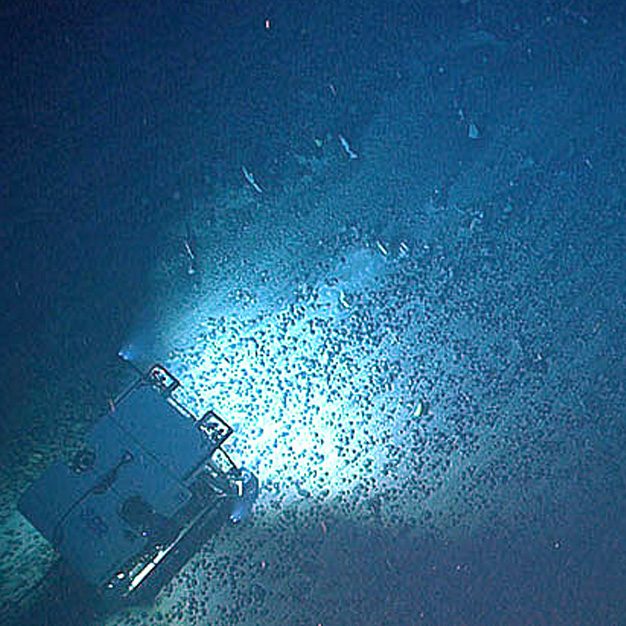
What lies beneath the surface of the ocean is largely unknown to most of us. The deep sea, generally defined as water below 200 metres, covers approximately 66% of the Earth’s surface and is home to some of the most unique and poorly understood ecosystems on the planet. And yet, before we have even begun to understand it, there are those who would cause irreversible damage to it for the exploitation of seabed minerals.
Deep-sea mining is not a distant hypothetical threat, but a real and present one, actively debated at the highest levels of international policy. As someone working at the intersection of marine science, policy and ocean advocacy, and someone who is passionate about climate mitigation, whilst still understanding the importance of applying the precautionary principle to protect biodiversity, I felt it was time to deepen my understanding of this issue. So, I completed the Deep Sea Academy’s course to become an effective advocate in the campaign against deep-sea mining, a training programme provided by the Sustainable Ocean Alliance that covers the science, policy, and campaigning landscape around deep-sea mining. This blog shares what I learned.
Introduction
The deep seabed contains large deposits of polymetallic nodules, cobalt-rich crusts, and seafloor massive sulphides, all of which contain minerals that extraction industries are keen to exploit. Supporters of deep-sea mining argue that these resources are necessary for the green transition and that the industry represents an economic opportunity. As I will discuss below, these arguments are flawed. What is not in dispute, however, is the potential for harm.
The environmental case: damage that is practically permanent
One of the most important things to understand about deep-sea mining is the timescale of its consequences. Species and ecosystems in the deep ocean are highly localised. Many exist nowhere else on Earth and depend on substrates such as polymetallic nodules that take millions of years to form. When mining operations remove and destroy these substrates, the damage is not temporary. It is practically permanent.
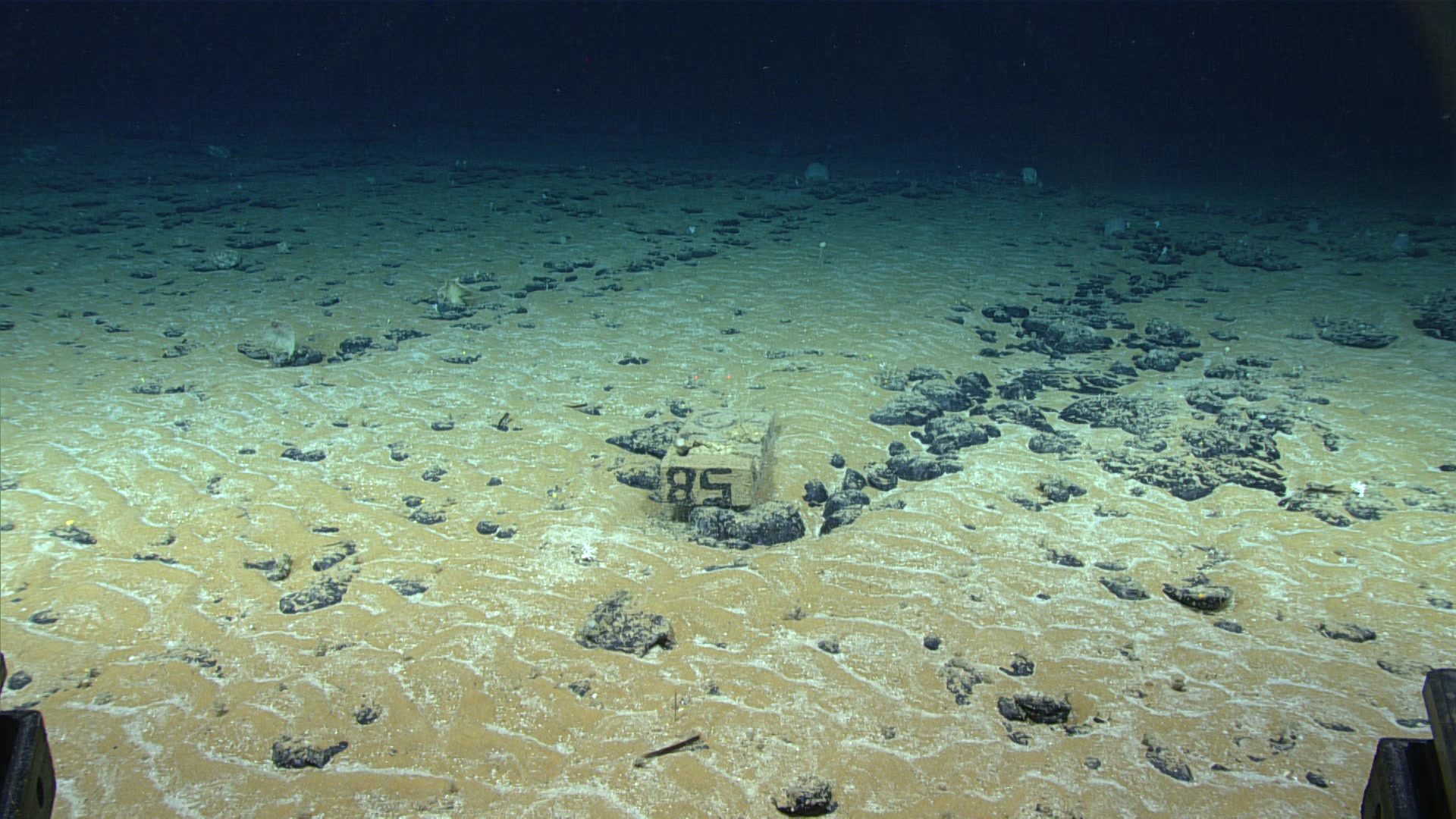
The consequences of this damage extend from biodiversity and ecosystem functioning to the climate regulation processes that deep-sea environments underpin. Research suggests that, rather than supporting climate goals, deep-sea mining could actively undermine them, disturbing seafloor sediments that store carbon over geological timescales and resulting in sediment plumes that disrupt carbon sequestration processes in the water column.
The cultural case: a threat to Indigenous heritage
Discussions about deep-sea mining often focus on ecology, but the threats extend far beyond biodiversity. For many Indigenous communities, particularly across the Pacific, where deep-sea mining is on their doorstep, the ocean is not an empty frontier. It is home to ancestors, spirits, and living cultural identity.
Until recently, the ISA had no provisions for recognising Indigenous peoples’ connection to the ocean. Even the language around intangible cultural heritage was not understood in that policy space. There has been hard-won progress: the ISA is now beginning to incorporate intangible cultural heritage into its draft regulations. This progress reflects sustained civil society pressure. Continued engagement is essential to ensure it translates into meaningful protection rather than a procedural tick-box.
The green transition argument: an outdated justification
The argument that deep-sea mining is necessary for the green transition is one of the most commonly deployed justifications for the industry, but it does not hold up.
The minerals most targeted by deep-sea mining operations, cobalt and nickel, are primarily associated with older battery chemistries that the sector is rapidly moving away from. Next-generation batteries focus on lithium iron phosphate (LFP) and sodium-ion chemistries, which significantly reduce or eliminate the need for these metals. And lithium, the element actually driving the energy transition at scale, is not what mining companies are targeting on the seafloor.
The green transition justification for deep-sea mining is built on an outdated picture of where battery technology is heading. Building a confident, evidence-based counter-narrative is an essential part of the toolkit for anyone working to challenge this industry.
The economic case: unproven at scale
Beyond the environmental and social arguments, the economic case for deep-sea mining is weaker than its proponents suggest. At full production, the industry is projected to supply around 4% of global nickel demand, barely a dent in terrestrial supply chains.
More strikingly, not a single commercial-scale deep-sea mining operation has ever been successfully completed. The industry has been promising economic viability for decades, but has not delivered it. It is asking for permanent environmental sacrifice in exchange for economic returns that remain unproven at scale. That is not a trade-off that can be justified.
How to advocate: building coalitions
The second half of the course moved from the ‘why’ to the ‘how’, with practical guidance from experts at the forefront of the campaign against deep-sea mining.
Campaigning effectively against deep-sea mining, or any complex environmental issue, requires strong and diverse coalitions. Those coalitions should be supported by three things: clarity of shared purpose, genuine trust between partners, and taking time to celebrate wins and the people who make them happen.
Ownership matters. Each partner in a coalition should feel real ownership over their distinct role, whether that is legal expertise, community organising, scientific communication, or political access. The environment of the coalition also sends a message. Building something inclusive, empowering, and even enjoyable is how you attract new allies, retain existing ones, and sustain the energy needed to continue the work over what are often very long campaigns.
How to advocate: grassroots campaigning
When engaging local communities, the starting point must always be what matters to them, not what matters to the campaign. Know your audience, be patient when building relationships, and resist the urge to lead with your own framing before you have understood theirs.
The real power in grassroots campaigning lies in reaching people who have never heard of the ISA or deep-sea mining. Digital campaigns can help extend the reach, and artivism is an effective tool for building public empathy around ocean issues. Creativity disarms, connects, and communicates across barriers that data alone rarely crosses. As with ocean literacy more broadly: people who know, care. People who care, act.
How to advocate: political advocacy and international negotiations
For those working at the policy level, the course offered concrete guidance on navigating international negotiations. Accredited observers at the ISA have the right to make formal interventions, and using that right well means being concise, leaving space for others to speak, and coordinating with fellow observers so that contributions are coherent and not redundant. Quality over quantity.
Know who to engage and when. Understand who is making the decisions, the advisors who inform them, and the timeline that tells you when to act. Relationships and influence take time to build, but be ready to move when an opportunity appears.
Finally, it is not all or nothing. Every small, incremental change in language, regulation, or institutional norms gets you closer to your goal. Every interaction is an opportunity to inform, shift perspectives, and build momentum. Patience is a strategic asset.
Final thoughts
The Deep Sea Academy’s course through the Sustainable Ocean Alliance is an excellent programme for anyone interested in deep-sea mining and its implications. What strikes me most and drives my continued investment in this topic is the breadth of the issue, from deep-sea ecology and Indigenous rights to climate mitigation and international negotiations. With such a complex and nuanced issue, the precautionary approach must be central to any and all advancements.
We should not be mining the deep sea. The environmental and cultural costs are too high, the economic and technological justifications are too weak, and the damage, once done, cannot be undone.
But knowing that is only the beginning. The course reminded me that the gap between scientific knowledge and policy change is not closed by facts alone. It is closed by people. People who are informed, organised, strategic, and willing to show up over the long term.